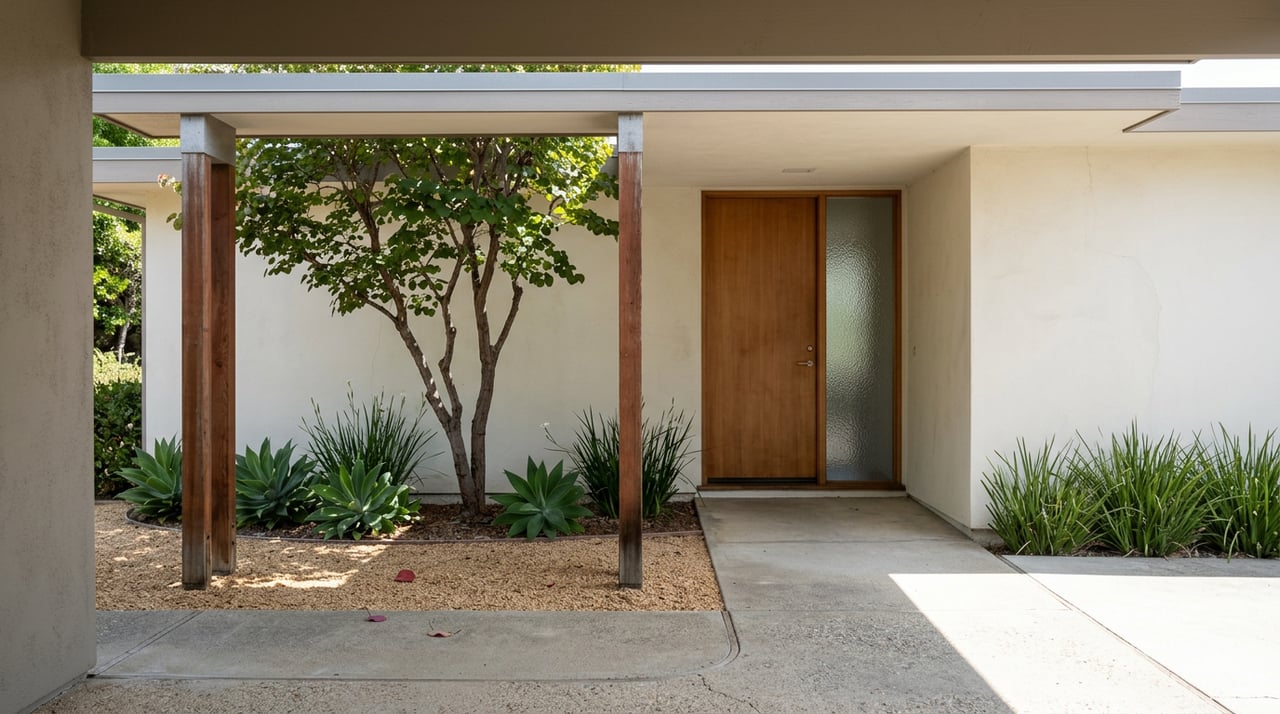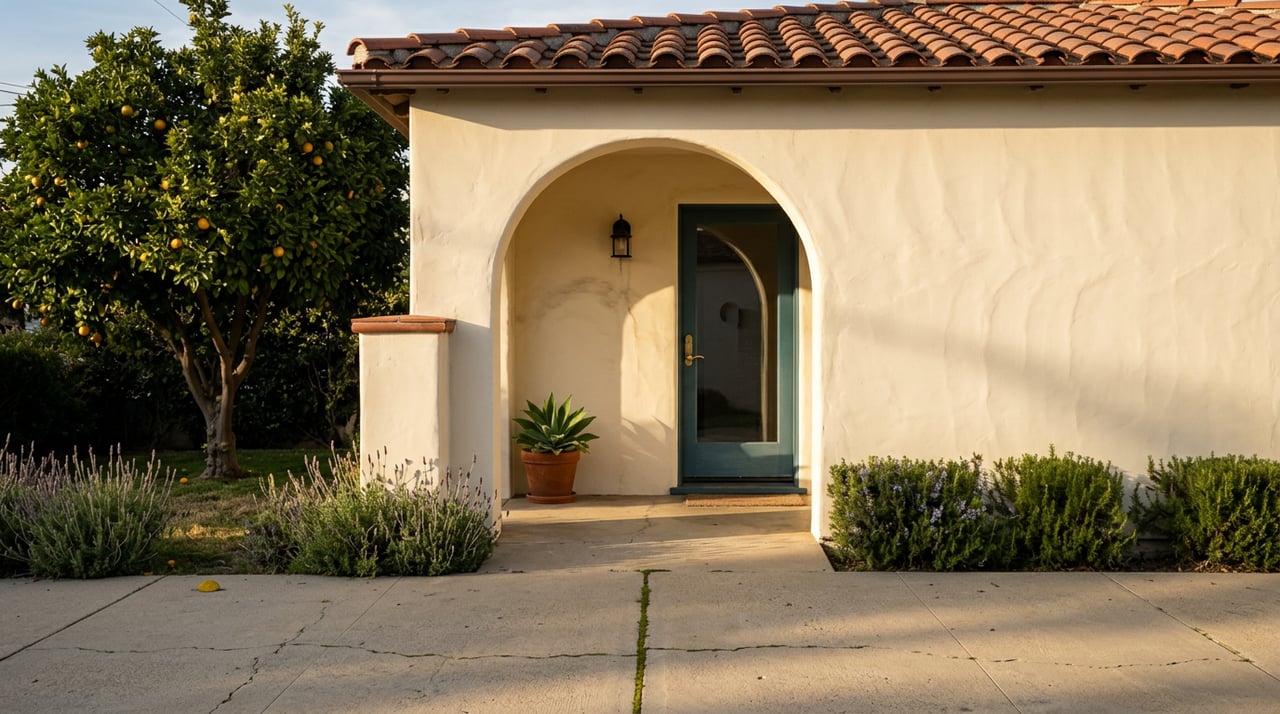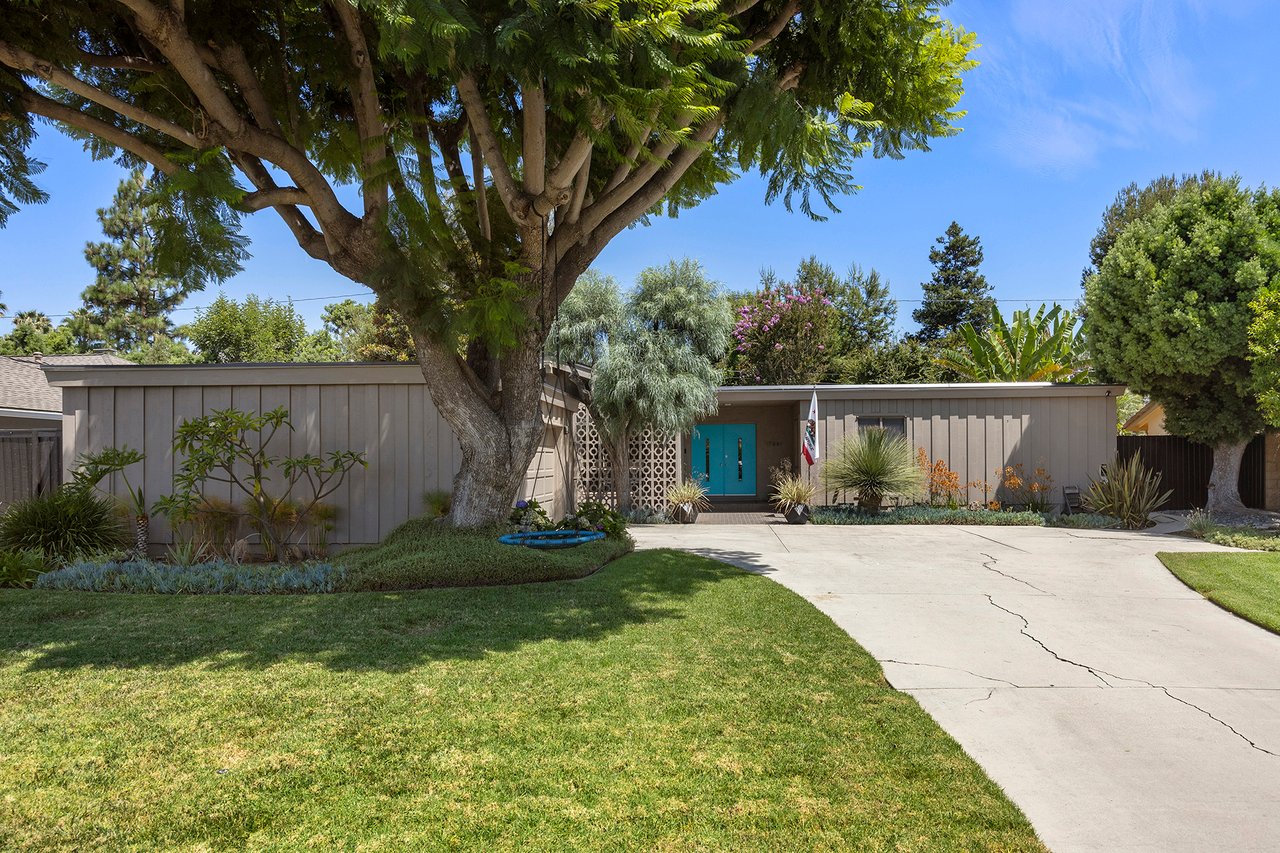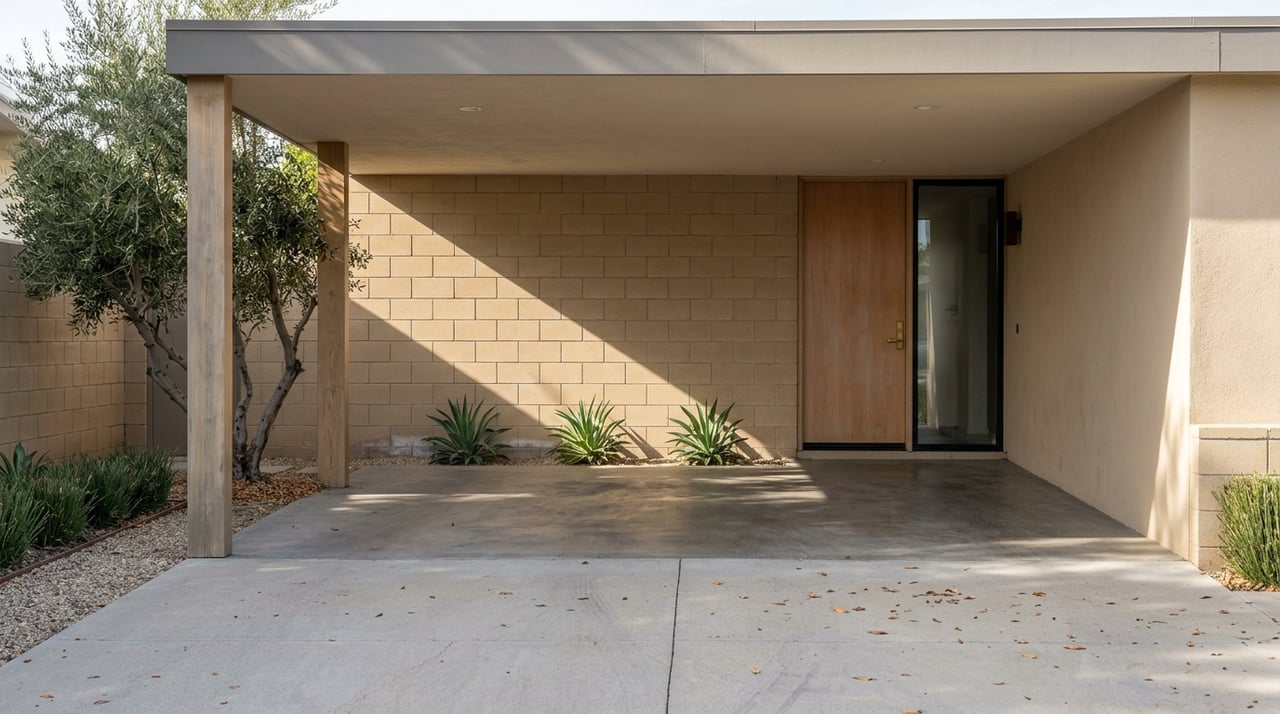
Two homes designed by Cliff May sit a few streets apart in Eastside Costa Mesa. Same post-and-beam bones, same walls of glass, same low-slung roofline that made his "atomic ranch" houses look like they grew out of the lot rather than sitting on top of it. One carries an active Mills Act contract that has already cut its owner's property tax bill for years. The other, just as old and just as original, has never been enrolled and may not get in this decade. A buyer comparing the two on price per square foot alone is missing the number that actually separates them.
Cliff May earned the title "Father of the California Ranch House" well before Costa Mesa's tracts went up, and by 1941 he had a national reputation for the style, later collaborating with Sunset Magazine on the book Western Ranch Houses. His signature moves, natural light pulled deep into the plan, a courtyard that blurs where the house ends and the yard begins, are what make these Costa Mesa tract homes worth the extra diligence a Mills Act search requires.
What the Mills Act Actually Promises
The Mills Act is a California program that lets a local government tax a qualifying historic property based on what it could earn as a rental rather than what it would fetch on the open market, which almost always produces a lower bill. It is state law in structure, but every city runs its own version. The California Office of Historic Preservation is explicit that each jurisdiction sets its own eligibility rules and decides how many contracts it will allow. That single sentence explains why a Mills Act contract on a Long Beach ranch home tells you nothing about what is possible three cities away in Costa Mesa.
Gate One: The Survey List Nobody Rereads
Costa Mesa's version of eligibility runs through a specific document. The city surveyed its building stock in 1997, cross-checked permit files and historical records, and used that survey to adopt a citywide historic preservation ordinance in October 1999. Only structures that landed on that list as contributing resources can apply for a Mills Act contract today.
That means a Cliff May home's age and architectural pedigree do not, by themselves, unlock anything. If the house was altered enough before or after the 1997 survey to lose contributing status, or if it was simply never flagged, it is not eligible no matter how faithfully the current owner has preserved the clerestory windows and the original kitchen layout. This is the first place a listing description and the actual paperwork can diverge, and it is worth confirming directly with the city's Planning Division rather than assuming a home's obvious character settles the question.
Gate Two: Twenty Contracts a Year, and a Queue That Outlasts the Calendar
Assume a Cliff May home clears the survey hurdle. It still has to clear a second one. Costa Mesa caps new Mills Act contracts at 20 per tax year and keeps a running waiting list, with applications accepted year round. A property can be fully documented, fully eligible, and still sit behind other applicants until a slot opens.
This is the detail that changes how a buyer should read "Mills Act eligible" on a listing sheet. Eligible and enrolled are two different states, and only one of them is producing a lower tax bill today. A house that already holds a contract has, by definition, made it through both gates. A house that is merely eligible is a bet on timing the seller cannot fully control.
What the Gap Is Actually Worth
Here is where the two gates stop being a technicality and start being a number worth negotiating over. Costa Mesa's average home value sat around $1.35 million as of August 2026, and the city's combined effective property tax rate, once local bonds and district assessments are layered on the base rate, runs roughly 1.19% to 1.29%. On a home tracking near that average, an unrestricted annual tax bill lands somewhere in the neighborhood of $16,000 to $17,400.
A Mills Act contract typically reduces the taxable value enough to cut that bill by a meaningful percentage, since the state's own guidance on the program elsewhere in California cites savings that commonly range from 20% to 70% depending on how the income approach values the specific property. Applied conservatively to a Costa Mesa Cliff May home, even a modest reduction is worth several thousand dollars a year, and the contract runs for a minimum term of ten years once approved. That is not a rounding error against a purchase price. It is a recurring cost difference that compounds for as long as the contract holds.
| Home with active Mills Act contract | Home eligible but not yet enrolled | |
|---|---|---|
| Survey status | Contributing, confirmed | Contributing, confirmed |
| Annual property tax | Reduced under active contract | Full assessed rate until enrolled |
| Time to realize savings | Already in effect | Dependent on waitlist position |
| Ten-year commitment | Already underway | Starts fresh once approved |
The two houses can be identical in every architectural detail and still carry a different real cost of ownership for years, simply because one got in the door first.
Why This Changes How You Shop or List
For a buyer, the practical move is to stop asking whether a Cliff May home is Mills Act eligible and start asking whether it has an active contract with a specific document number, or is only on the survey with no application filed. Those are different sentences an agent or seller should be able to answer directly.
For a seller, the lead time matters more than it might seem. Eastside Costa Mesa's median sale prices climbed sharply year over year heading into the second half of summer 2026, though homes in the area are taking somewhat longer to sell than they did the previous summer. In a market where days on market are stretching, a Mills Act application started early can become a selling point that is actually in force by the time the home hits the market, rather than a line item still waiting in line at City Hall.
A short checklist before writing an offer or listing a Cliff May home:
- Confirm survey status directly with Costa Mesa's Economic and Development Services Planning division rather than relying on a listing description.
- If a Mills Act application exists, ask for its filing date and where it sits relative to the 20-contract annual cap.
- If a contract is already active, request the contract's start date, since that determines how many years remain on the ten-year minimum term.
A Few Questions Worth Asking Before You Move Forward
Does a Mills Act contract transfer when a Cliff May home is sold? The contract runs with the property rather than the individual owner, so a sale does not erase it. Buyers should still confirm the contract's current status and remaining term directly with the city rather than assuming continuity.
If a Cliff May home is original and clearly historic, isn't it automatically eligible? No. Eligibility depends on whether the specific property was listed as a contributing resource in Costa Mesa's 1997 survey and 1999 ordinance, not on how original or architecturally significant the house appears today.
How would I find out where a specific address stands in the queue? Costa Mesa's Planning Division maintains the waiting list and can confirm both survey status and queue position for a given property. That conversation is worth having before an offer is written, not after.
If you are weighing a Cliff May home in Eastside Costa Mesa against another mid-century option in Orange County, the architecture is only half the comparison. The tax mechanics behind it deserve the same scrutiny as the floor plan. Better Living SoCal tracks these details tract by tract, and we're glad to talk through what a specific property's Mills Act status actually looks like before you make an offer or set a list price.