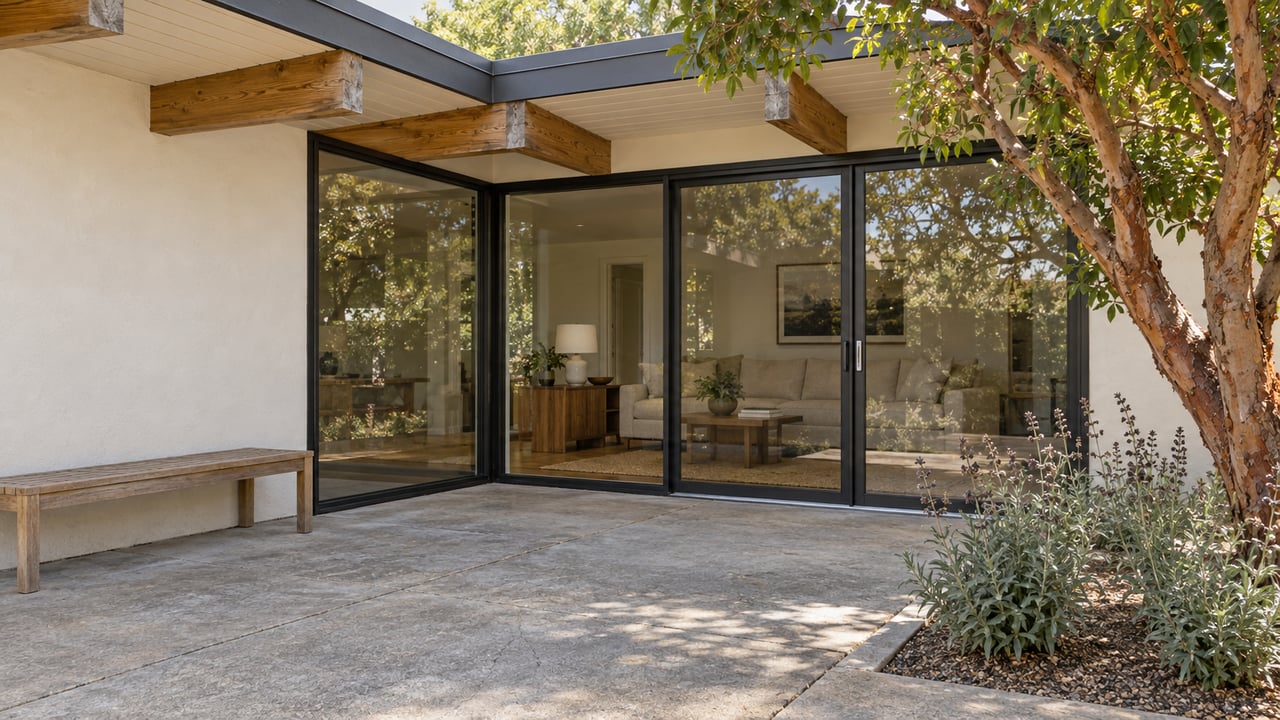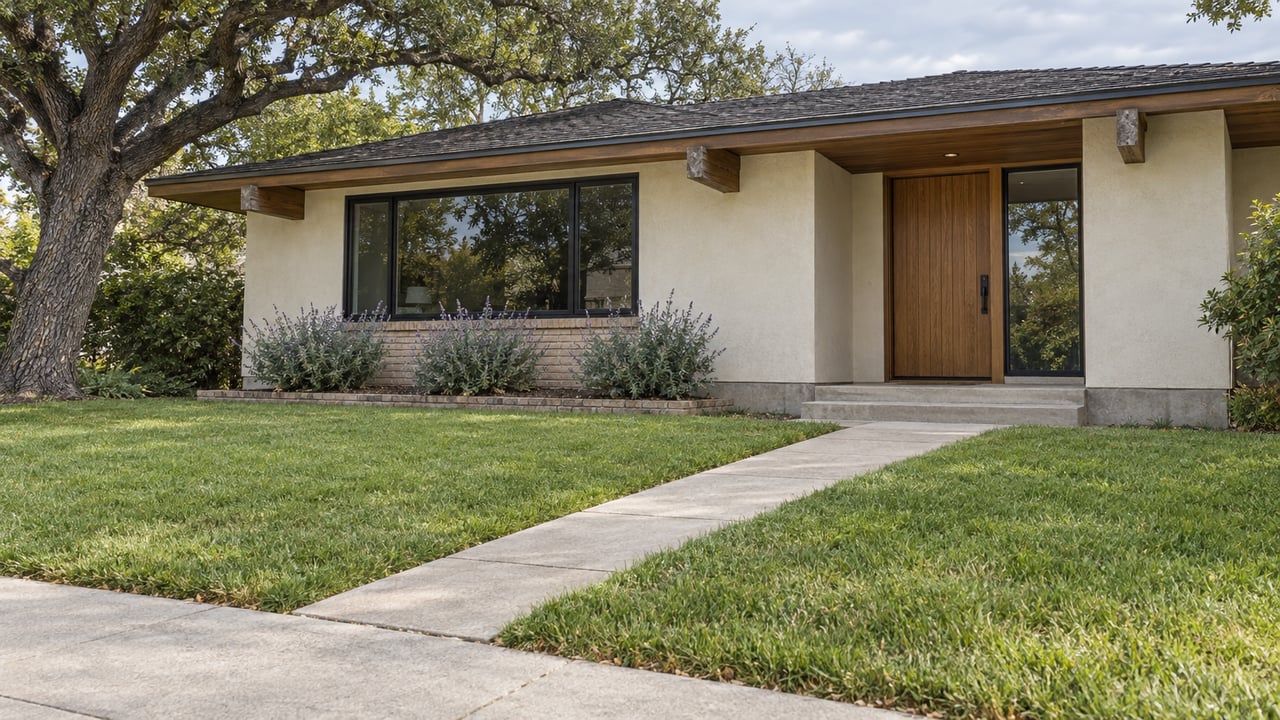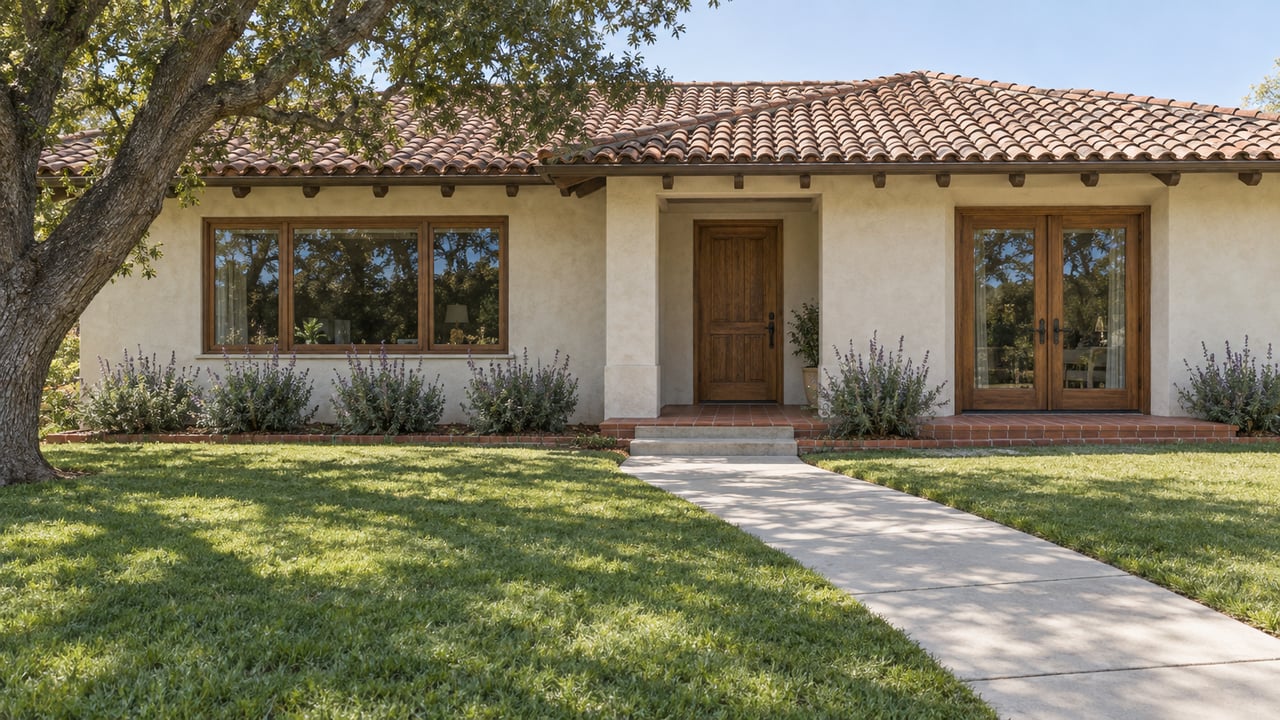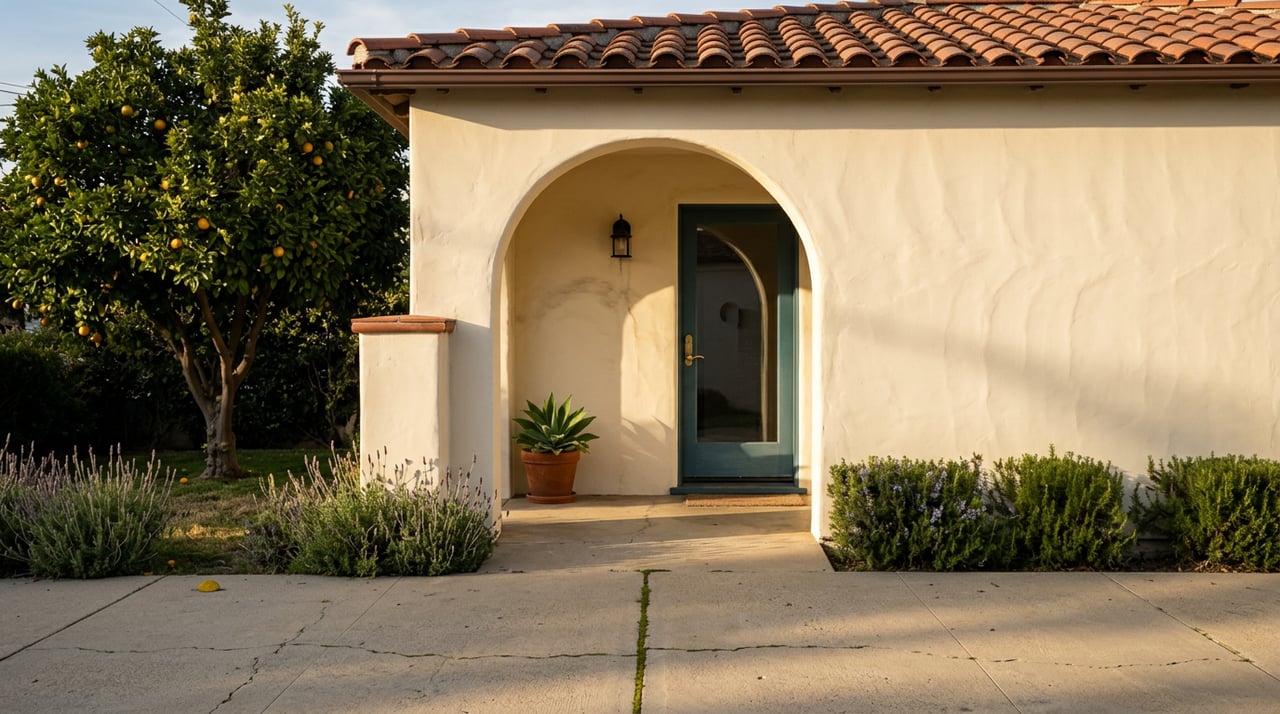
A Homes.com local guide to Washington Square quotes Nina Jirik, vice president of the Washington Square Neighborhood Association, describing the northwest Santa Ana enclave of century-old bungalows, Spanish-style cottages and Tudor Revivals tucked between downtown and the 5 Freeway: "Whenever a house is sold in other areas, the house gets torn down. But here, everyone really wants to maintain the original details." It reads like a line about pride of ownership. It is actually a line about supply.
If you have been comparing Santa Ana neighborhoods by scrolling median prices and days-on-market figures, Washington Square looks like it should be the hottest corner of the city. Homes there have recently recorded days-on-market figures as low as 17 to 19 days, according to listing data, against a citywide Santa Ana average that ran 45 days in the three months ending May 2026 and stretched to 72 days by August 2026. A gap that wide usually means one thing in real estate commentary: overwhelming buyer demand. Here it means something closer to the opposite. Washington Square isn't selling fast because everyone wants in. It's selling fast because almost nothing is for sale, and what little comes up gets absorbed before it can sit.
Three Listings, Not Thirty
At any given moment, Washington Square typically has only a handful of active listings, sometimes as few as three. Compare that to a citywide market where Santa Ana as a whole routinely carries well over 100 homes, condos, townhomes and multi-family units for sale at once, and the math on days-on-market stops looking like heat and starts looking like a bottleneck. A market with three listings does not need thirty interested buyers to put all three under contract in under three weeks. It needs three.
This is the part that a median-price comparison hides. A buyer who searches "Washington Square Santa Ana homes for sale" and sees homes spending little time on the market and a rising price tends to read urgency into the numbers: get in now, before it goes higher. The more accurate read is different. The neighborhood isn't accelerating. It's constricted. Homes there simply don't change hands very often, and when one does, the sale clears quickly because the pool of interested, qualified buyers is chasing a genuinely small number of opportunities, not because a wave of new demand just arrived.
Realtor Sarah Covarrubias, who has worked Orange County real estate for 25 years, has described the appeal in comparative terms: Washington Square draws buyers with the same uniqueness and beauty they'd find in Floral Park or Park Santiago, at a more accessible price. That comparison is useful, but it also means Washington Square isn't competing on scarcity created by prestige. It's competing on scarcity created by turnover, and turnover is the number worth watching.
What a House Actually Costs, By Style
Price in Washington Square splits fairly cleanly along architectural lines, which matters if you're budgeting rather than just watching a median move.
| Home style | Typical sale range |
|---|---|
| Craftsman | $600,000 to $900,000 |
| Ranch-style | $900,000 to $1,000,000 |
| Tudor Revival | $895,000 to over $1,000,000 |
A neighborhood-wide median obscures this. Two houses three streets apart can differ by $300,000 purely on style and condition, which means the "median home price" a buyer sees quoted for Washington Square is really a composite of several distinct micro-markets stacked on top of each other. Knowing which style you're shopping tells you more than the headline number ever will.
The Contract That Keeps Owners in Place
The real mechanism behind the low turnover isn't sentimental. It's fiscal. Many of Washington Square's historic homes are enrolled in California's Mills Act program, and the terms of that program change the math on selling in ways that rarely show up in a listing description.
Under the Mills Act, adopted by the state legislature in 1972, a property owner enters into a Historic Property Preservation Agreement with the city in exchange for a reduction in property taxes, in return for a commitment to maintain and restore the home to specific preservation standards. The contract runs for a minimum ten-year term, renews automatically every year, and transfers automatically to the next owner when the property sells. The City of Santa Ana also requires periodic compliance reporting, at minimum every five years, documenting exterior improvements and their costs, to confirm the owner is holding up their end of the deal.
None of that is a reason to sell. It's a reason to stay. An owner who has held a Mills Act contract for a decade or more is often sitting on a property tax bill meaningfully below what a new buyer would pay at current assessed value. The City of Santa Ana's own program allows for tax savings of up to 50 percent, depending on the property. Selling means walking away from that basis. For many longtime Washington Square owners, the math simply doesn't favor a move, which is a big part of why so few homes reach the market in the first place, and why the ones that do get absorbed quickly by buyers who understand what they're competing for.
It's worth being clear on what this means for a buyer, too: the tax benefit isn't a one-time perk you inherit passively. It transfers with the deed, but so does the obligation. Any exterior modification to a Mills Act property in Santa Ana requires a Certificate of Appropriateness from the Historic Resources Commission, and major alterations or demolitions go through that same review. A buyer drawn to Washington Square for the character of the homes is also signing up to preserve that character on the city's terms, not just their own taste.
The Social Glue That Reinforces the Math
The tax incentive explains why an owner might stay. The neighborhood's culture explains why they want to. The Washington Square Neighborhood Association, which has operated as a nonprofit for residents in this pocket of northwest Santa Ana, reports that more than 60 percent of residents participate in its community calendar, built around events like a Spring Wine Garden, a Fourth of July bike parade and neighborhood movie nights. That is an unusually high participation rate for a residential association, and it functions as a retention mechanism as much as a social one. Quarterly general meetings are held at Heroes Elementary School, and board meetings happen monthly, which means the infrastructure for staying connected to your neighbors here runs on a tighter cadence than in most single-family neighborhoods.
A Walk Score of 73 puts daily errands, and downtown Santa Ana, within easy reach on foot. Riverview Park, about a mile out, adds trails, basketball courts and an 18-hole public golf course rated "Best Value in Orange County" by the Orange County Golf Guide. None of this shows up in a days-on-market chart, but it's part of why the people who buy into Washington Square tend not to leave, which loops back into the same supply constraint that shapes the pricing and pace of the market.
What This Means If You're Comparing Neighborhoods
If you are cross-shopping Santa Ana's historic districts, the takeaway from Washington Square isn't "act fast because it's hot." It's "understand why it's tight before you assume the price will keep climbing at the same rate." A market defined by a handful of long-held, Mills Act-protected homes behaves differently than a market with normal turnover. Price appreciation can look sharp on a small sample of sales precisely because the sample is small. A single high sale or low sale can swing the reported median more than it would in a neighborhood with dozens of comparable transactions each quarter.
Practically, that means two things. First, financing readiness matters more here than almost anywhere else in the city, because homes can spend just 17 to 19 days on the market, leaving buyers little time to get ready before making an offer. Second, understand what you're buying before you fall for the facade. A Mills Act home comes with a tax benefit worth asking a professional about, and a maintenance obligation worth reading in full before you make an offer.
A Few Questions Worth Asking Before You Look Here
Does the Mills Act tax benefit transfer to me if I buy a home under contract? Yes. The agreement runs with the land and passes automatically to the new owner at sale, along with the preservation obligations attached to it.
Is Washington Square part of Tustin or Santa Ana? It sits in northwest Santa Ana, near Floral Park and Park Santiago, not in the city of Tustin. If you've seen it referenced differently elsewhere, confirm the city before you search listings.
What happens if a Mills Act property falls out of compliance? The City of Santa Ana says the city can move to cancel the agreement following a public hearing, and the owner would owe a cancellation fee set under state law. It's a real obligation, not a formality.
If you're weighing Washington Square against Floral Park, Park Santiago or another Santa Ana historic district, the numbers alone won't tell you which one fits. A conversation with someone who tracks these neighborhoods block by block will. Better Living SoCal can walk you through what a Mills Act contract actually means for your specific offer, and what a fast-moving market requires from you before you ever write one.
This article is general information, not legal, tax or financial advice. Consult a qualified professional about your situation.