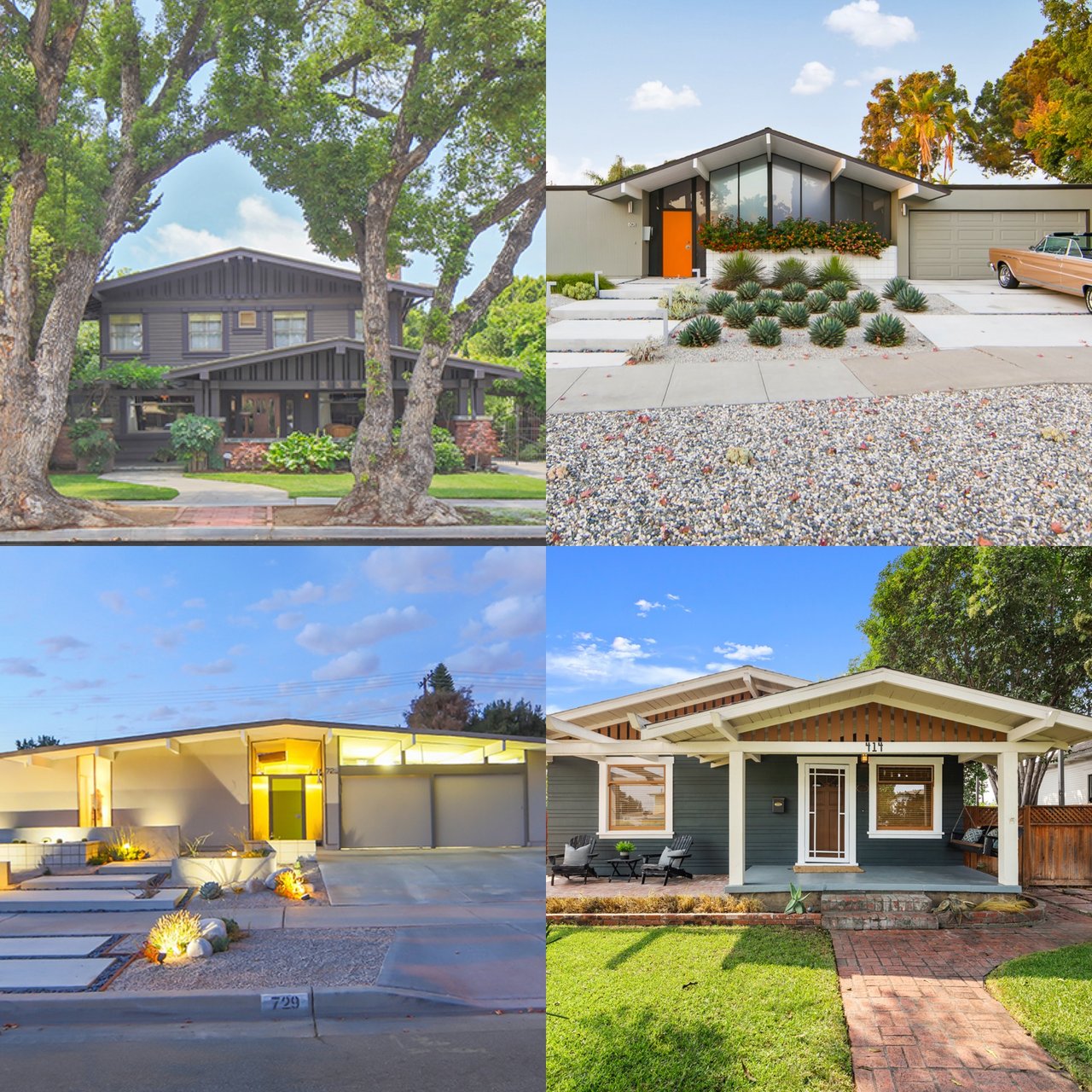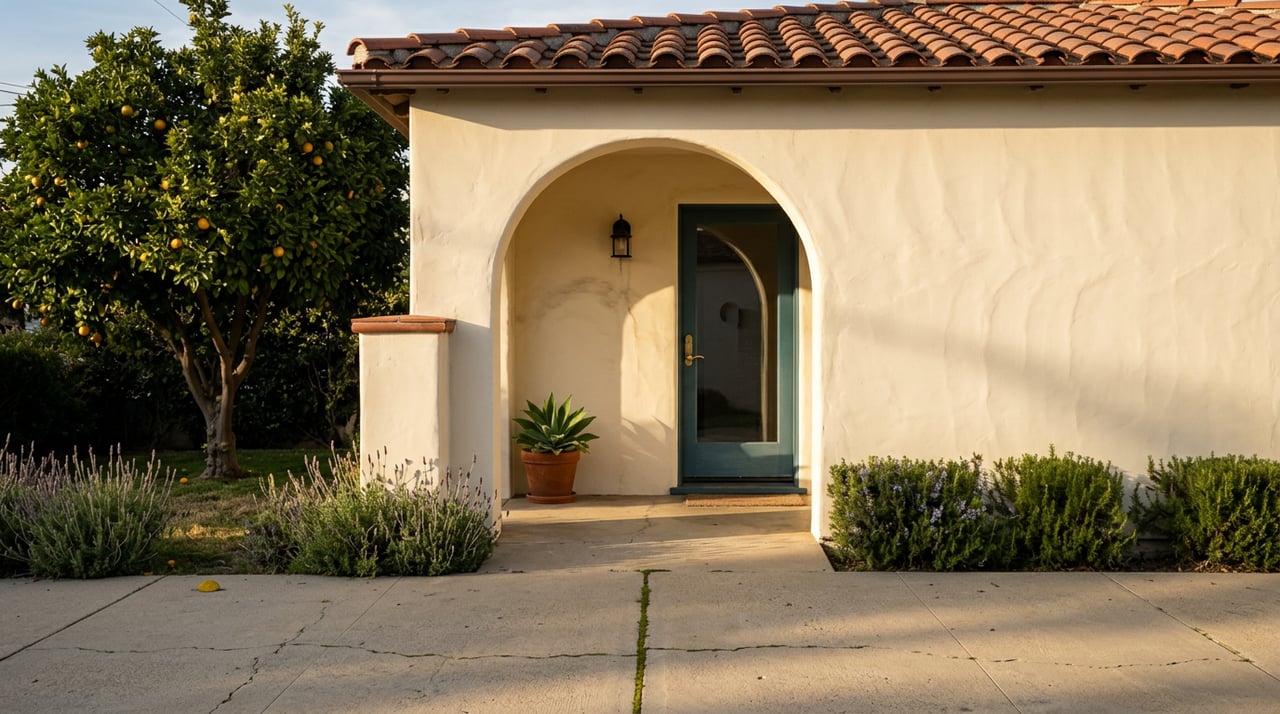
A hobbyist videographer named Daniel spends his weekends walking three neighborhoods in the city of Orange with a camera, no narration, just the natural sound of the street. In one video he passes a lone cyclist. In another, a dog barks somewhere off camera, maybe a block away. A couple gets out of a car and disappears into a carport. That is roughly the extent of the action. At one point he pauses on a single pink flamingo staked into a Fairmeadow lawn, the closest thing to a landmark in twenty minutes of footage. He has described the experience of walking these blocks as feeling like you are in a theme park. The houses look the way they looked when they were built. Nobody seems to be doing anything to them.
That stillness is not neglect. It is not the quiet of a neighborhood in decline or the quiet of a street where nobody is home. It is the quiet of a place that agreed, formally and on the record, to stop changing its face to the street. Fairhaven, Fairmeadow and Fairhills, the three Eichler tracts of Orange, became local historic districts in 2018, with design rules attached that govern exactly what a homeowner can and cannot do to a facade. That protection is a large part of why a walk through these tracts feels less like visiting a neighborhood and more like visiting a preserved moment.
Three Tracts, One Builder Nobody Expected Here
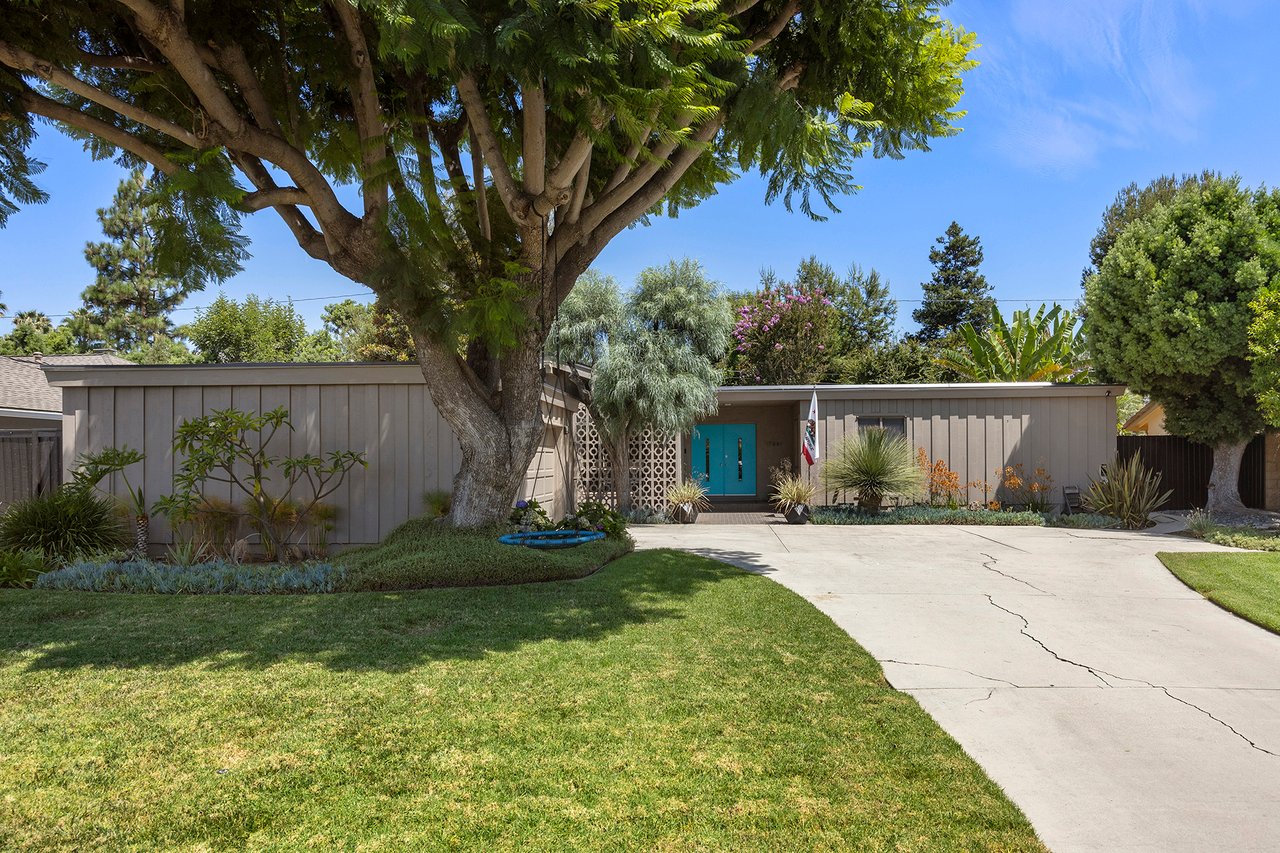
Joseph Eichler built more than 10,000 tract homes in his lifetime, most of them around Palo Alto and the Peninsula, for postwar buyers who wanted glass walls and flat rooflines instead of Spanish tile and picture windows. He only brought that vision south once, in the early 1960s, to a stretch of Orange County several hundred miles from his usual territory. Fairhaven went up in 1960, Fairmeadow in 1962, Fairhills in 1964. Together they account for roughly 340 homes, built from plans by three architecture firms Eichler trusted repeatedly: Anshen and Allen, Jones and Emmons, and Claude Oakland.
Southern California as a whole only ever got about 575 Eichler homes. That means more than six in ten Southern California Eichlers sit inside these three Orange tracts. Nowhere else in the region comes close. If you want to see what Eichler was doing in this part of the state, Orange is not one option among several. It is close to the only option.
Fairhaven runs along South Woodland Street and the streets that cross it, in the southernmost part of the city. Fairmeadow sits just north, west of North Cambridge Street between Taft and Glendale avenues, with houses strung along Shaffer, Woodside, Winlock and Ridgewood streets and Ferndale, Briardale and Palmdale avenues. Fairhills, the smallest and most secluded of the three, threads through the eastern edge of the city along North Granada Drive, North Linda Vista Street, East Elsinore Avenue and North San Remo Place, tucked closer to the foothills than the other two.
The Vote That Froze the Streetscape
In November 2018, the Orange City Council voted five to none to designate all three tracts as local historic districts. Nobody spoke against it at the meeting. Alongside the designation, the city adopted a set of rules known as the Eichler Design Standards, built specifically to govern what happens to these homes when you can see it from the sidewalk.
The standards are direct about the one thing that would change the character of these blocks fastest. No second story can be added on top of an existing Eichler in any of the three tracts. A homeowner can still add square footage toward the back of a lot, under fairly strict conditions, but the low, horizontal profile that defines the street view stays put. Smaller changes get handled administratively, reviewed by the city's historic preservation planner. Bigger ones go to a design review committee that looks specifically at whether the change is visible from the street and whether it respects a neighbor's privacy.
When the city surveyed the tracts ahead of the designation, it found that nearly every home in all three neighborhoods was intact enough to count as a contributing structure to the historic district. Only a handful of properties in each tract had been altered past the point of qualifying. That is an unusually high survival rate for houses now pushing past sixty years old, and it is the reason Daniel's camera keeps finding original carports and original rooflines block after block instead of the mismatched additions you would expect in a tract this age.
There is a detail here that surprises people who assume federal recognition is always the stronger protection. Krista Nicholds, who led Preserve Orange County at the time of the designation, has pointed out that the city's own historic district status actually protects these houses more tightly than a listing on the National Register of Historic Places would have. The Register confers prestige. Orange's local ordinance confers enforcement.
How the Neighborhood Opened Its Doors, Once
For a community with a design standard this strict, the tracts have also been surprisingly willing to let strangers inside. The American Institute of Architects, Orange County chapter, led a walking tour through Fairhaven back in 2015, guiding visitors block by block through homes that residents volunteered to open.
The bigger moment came in May 2019, when Preserve Orange County staged what organizers called the most comprehensive Eichler home tour Orange had ever seen, timed to celebrate the historic district vote. The event ran two days, with a self-guided tour through homes across all three tracts, a cocktail reception inside one Eichler, and a panel discussion featuring architectural historian Alan Hess, Chapman University's Tom Zoellner, planner Robert Imboden, and USC preservation professor Trudi Sandmeier. Hess put the era in context on the panel, noting that Orange County was growing rapidly in the 1960s and that Eichler wanted to give new arrivals a way to live inside that growth. Imboden, who helped nominate the tracts for federal recognition before the city's own designation overtook that effort, has said the Eichler homes remain popular with architects, designers and artists in a way that has never really faded.
Homeowners opened their doors for reasons that were personal as much as architectural. Fairhaven residents Jeanine Singer and Chris Kopczynski put their house on the tour partly because visiting an Eichler open house years earlier had changed the direction of their own lives. Adrian and Thuy Turner, longtime owners of two homes in the tracts, tracked down the original architectural plans for one of their properties and spent years restoring it to match, a project driven by nothing more than wanting the house to look the way it was supposed to look.
Better Living SoCal partnered with Preserve Orange County to help organize that 2019 tour, and years earlier, broker Kelly Laule had been the one who originally pushed to get the tracts nominated for the National Register in the first place, before the city stepped in with its own designation. Neither fact is the point of this piece. They are simply part of how these three neighborhoods got the protection that now keeps them this still.
What a Quiet Street Is Actually Telling You
None of this means nothing ever happens in Fairhaven, Fairmeadow or Fairhills. It means the visible signs of change move slower here than almost anywhere else in Orange County built in the same decade. A remodel is happening behind a wall you cannot see from the sidewalk. A kitchen is being redone without touching the roofline. The stillness Daniel keeps finding with his camera is not the absence of life. It is the presence of an agreement, backed by a neighborhood full of people who liked their houses enough to push the city, in 2018, to keep them exactly as they were handed down.
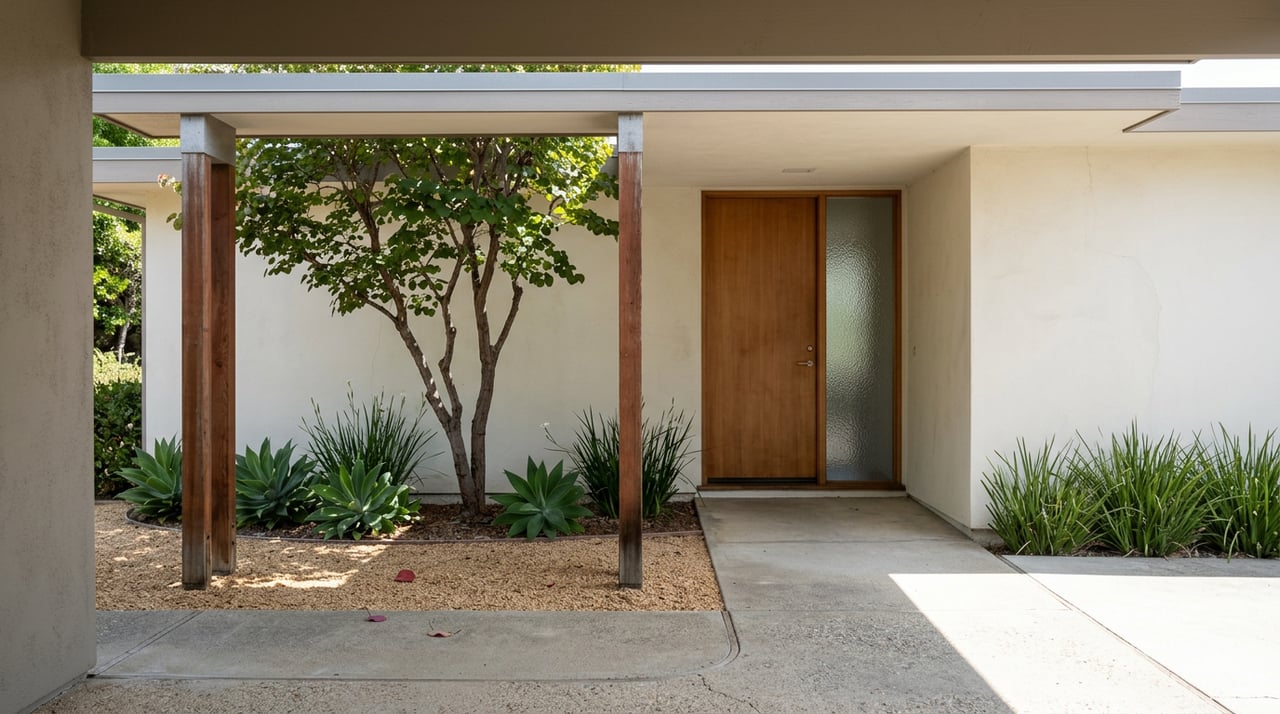
If you walk any of the three tracts yourself, the giveaway is not architectural detail so much as consistency. Look for the flat or gently pitched rooflines that never seem to gain a second story, the post and beam entries that repeat from house to house without repeating exactly, and the quiet that Daniel's camera keeps recording as if it were the whole story. It mostly is.
If you already live inside one of these tracts, or you are simply curious what a preservation vote actually looks like sixty years after the fact, Better Living SoCal has spent years walking these same streets and knows the difference between a change the design standards allow and one they do not. Talk with a local agent whenever you are ready to look closer.