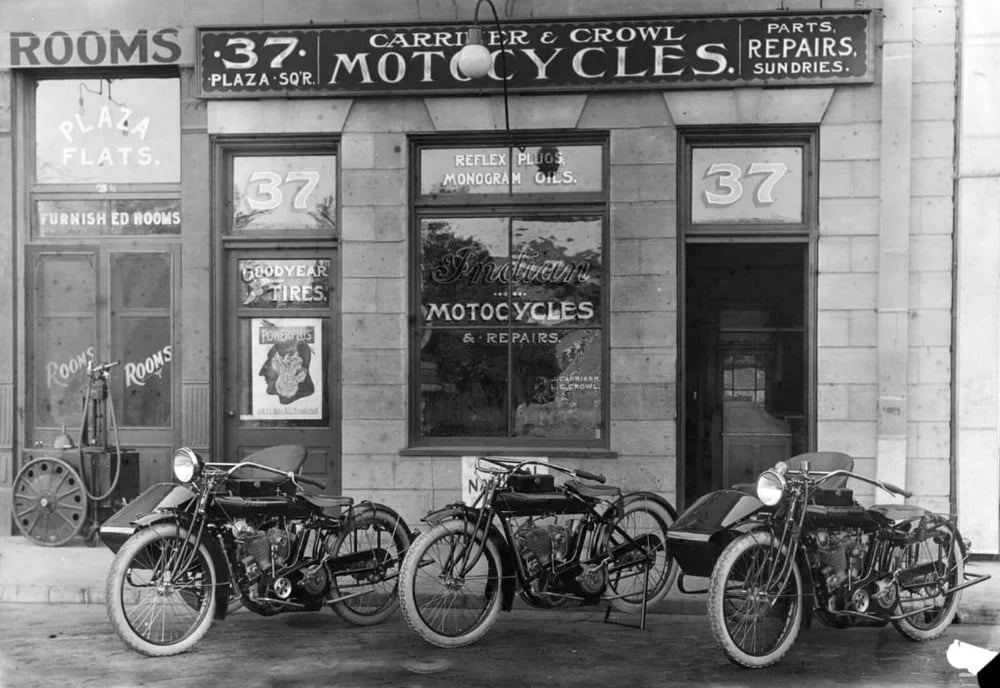
Old Towne Orange: The Whole Story Behind the Charm
Most people walk into Old Towne Orange and immediately feel something. The tree-lined streets. The antique shops. The storefronts that look like a movie set — except they're completely real, and many of them have been standing since before your great-grandmother was born. It feels effortless, almost accidental.
Spoiler: none of it was an accident.
What looks like a happy collision of history is actually one of the most intentional — and intact — architectural environments in all of California. Listed on the National Register of Historic Places and home to Orange County's oldest operating bank, it holds the distinction of being the largest National Register Historic District in the entire state. Wikipedia And once you know what you're actually looking at, you can never unsee it.
It Started With a Poker Game
Before there was a historic district, there was a land deal — and then there was a card game.
In 1869, attorneys Alfred Chapman and Andrew Glassell acquired 1,385 acres from the Rancho Santiago de Santa Ana as payment for legal fees. They planned a town with 10-acre farm lots surrounding a 40-acre central town site, trying to mirror William Penn's design for Philadelphia — with two cross streets dividing the city into quadrants. Preserveorangecounty
The city was originally named Richland in 1871, but the name had to be changed when it was discovered another Richland already existed in California. Iheartoldtowneorange The finalists — representing the area's agricultural richness — were Lemon, Olive, Almond, and Orange. Chapman, Glassell, and two friends sat down for a poker game, and whoever won got to rename the city. The lucky winner's pick: Orange. Preserveorangecounty
The rest, quite literally, is history.
Today, Chapman Avenue and Glassell Street intersect at the famous Plaza, and the surrounding streets are named after fruits, nuts, and trees — Maple, Lemon, Cypress, Walnut — a nod to the rich agricultural landscape that gave the city its identity. Iheartoldtowneorange
One Square Mile. Over 1,300 Buildings. 50+ Architectural Styles.
Here's the number that stops people cold: the earliest buildings in Old Towne Orange date to the 1880s, when the entire population of the city was just 866 people. City of Orange And yet what they built in that era has outlasted almost everything around it.
In one square mile exists a remarkable density of vintage buildings — homes, businesses, churches, schools, a train depot, packing houses, lofts, and parks — representing more than 50 architectural styles and spanning construction from roughly 1874 to 1940. Preserveorangecounty That's not a neighborhood. That's a living museum that people actually live in.
And it earned the recognition to prove it. The American Planning Association named the Plaza Historic District a "Great Place in America" — placing it alongside New York's Central Park, Los Angeles' Olvera Street, and Chicago's Magnificent Mile. Preserveorangecounty That's the company Old Towne keeps.
The Plaza: One Design Decision That Changed Everything
Most of Southern California was built on a grid. Neat. Efficient. And about as romantic as a parking lot.
Old Towne Orange had other ideas. Established in 1871 and meticulously planned around a central plaza — a rarity among Southern California towns — the design led to the creation of Plaza Park, affectionately known as "The Circle," which remains the community's focal point to this day. The park's iconic fountain, installed in 1937, stands as a testament to the city's commitment to preserving its heritage. Discoverorangecounty
That single planning decision — a radial layout anchored by a civic square rather than a simple grid — shaped where businesses clustered, how neighborhoods grew, and why certain properties command price premiums more than 150 years later. It's still quietly doing its job today.
A Living Timeline You Can Walk Through
What makes Old Towne genuinely exceptional is that it's not just "historic" — it's a nearly unbroken architectural timeline. Like walking through a living textbook, except the textbook has original hardwood floors and a detached carriage house.
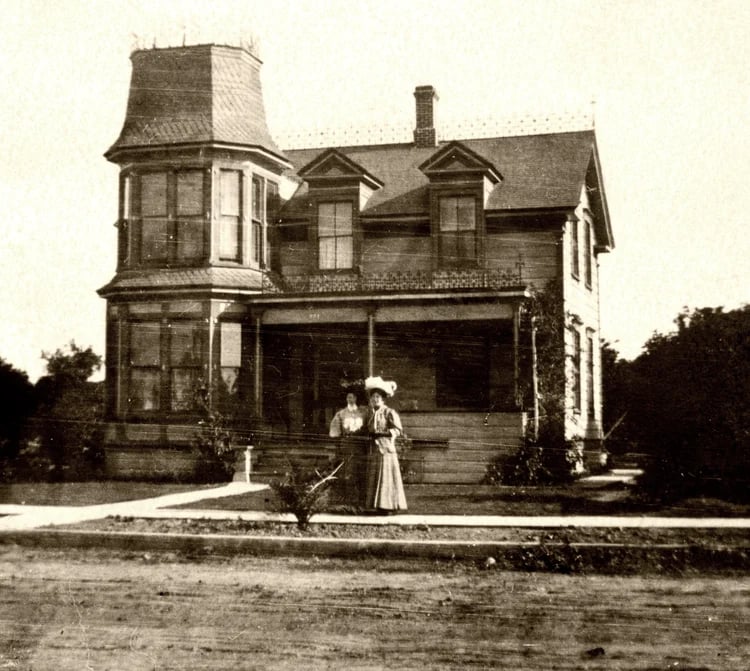
Start in the 1880s and 1890s, and you're in Italianate and Eastlake Victorian territory — tall, narrow windows, ornate woodwork, and the kind of craftsmanship built on Orange County's early citrus wealth. You can still see it in the Ehlen & Grote Block near the Plaza, one of the finest surviving examples of Italianate brick commercial construction in the region. Ocarchitectureguide
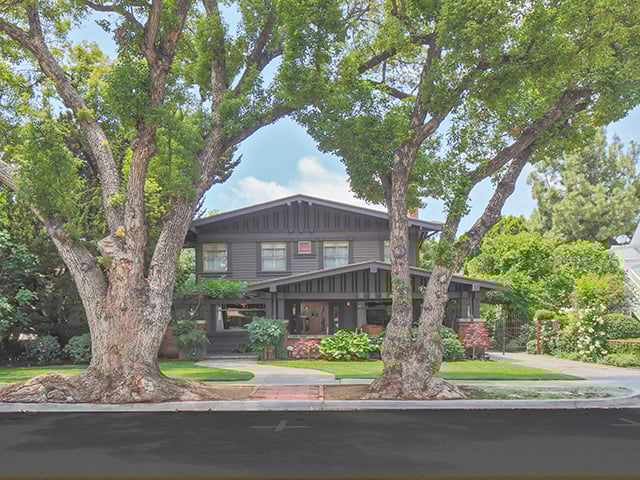
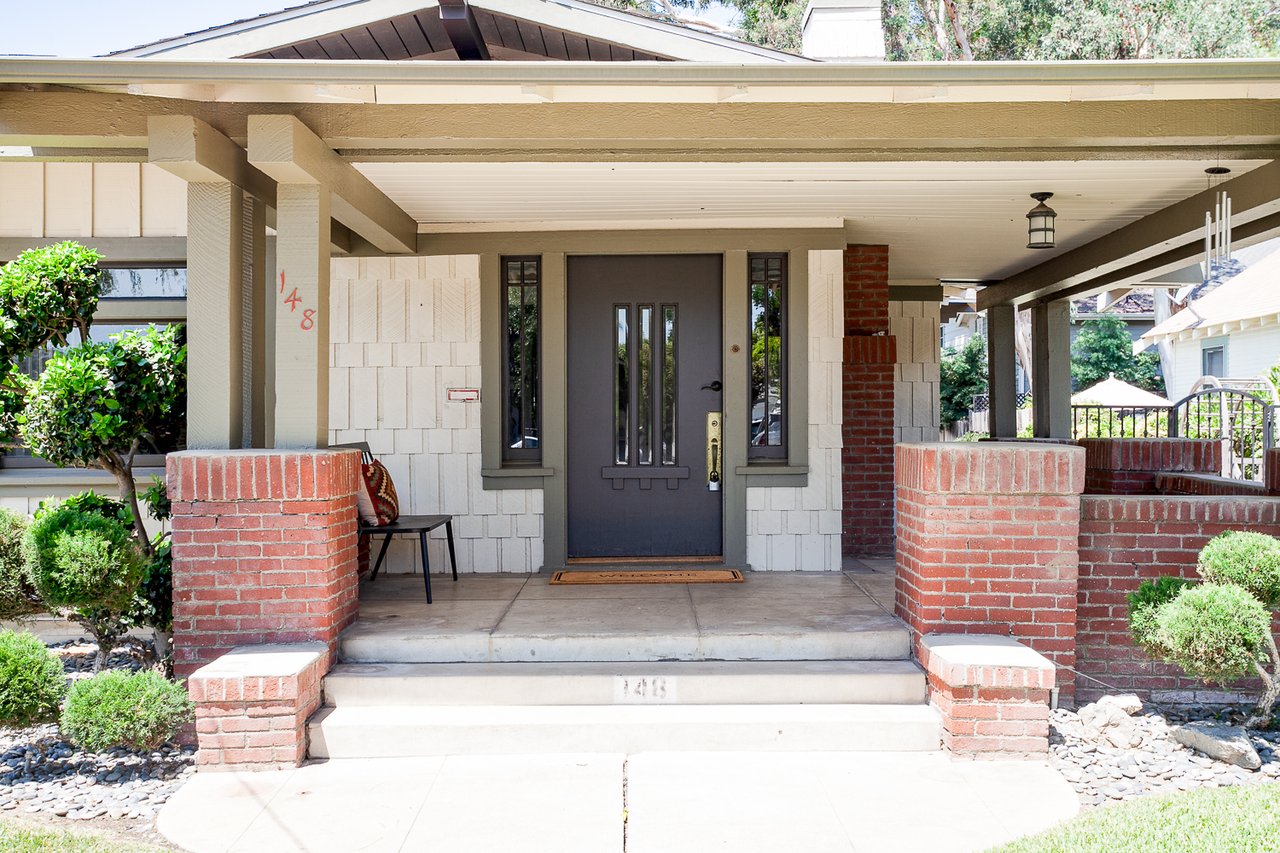
Fast forward to the early 1900s, and the Craftsman bungalow takes over. This wasn't just a style shift — it was a philosophical movement. The Arts and Crafts era was a direct response to industrialization and mass production: a return to the handmade, the purposeful, the human-scaled. In Old Towne, many of these homes were built with local redwood and clinker brick foundations — details most people walk right past but that speak volumes about authenticity, era, and construction quality.
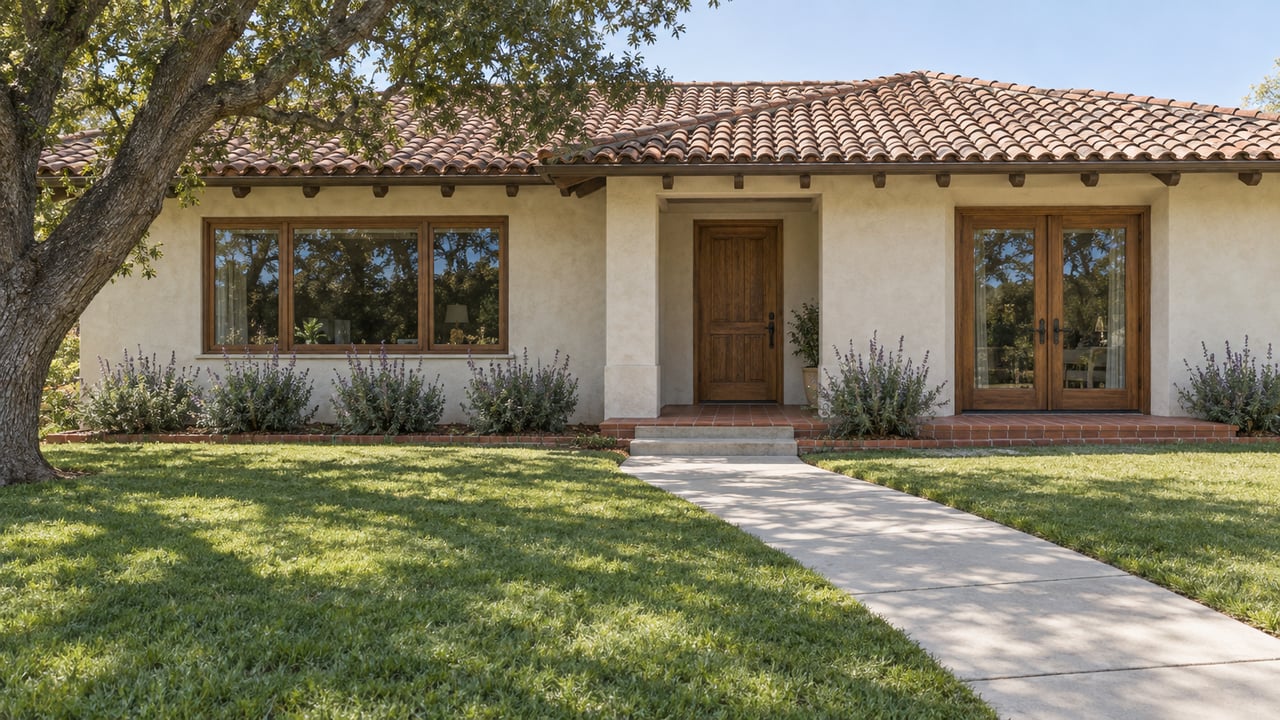
Then come the 1920s and 30s, and with them, Spanish Colonial Revival — arguably the most California thing to ever happen to architecture. The Orange Train Station is a standout example of this style, with its stucco exterior, red tile roof, and arched detailing. Ocarchitectureguide These homes and buildings were designed for this climate, this light, this landscape. And in Old Towne, they sit right alongside the Victorians and Craftsmans, creating a layered streetscape you simply cannot manufacture.
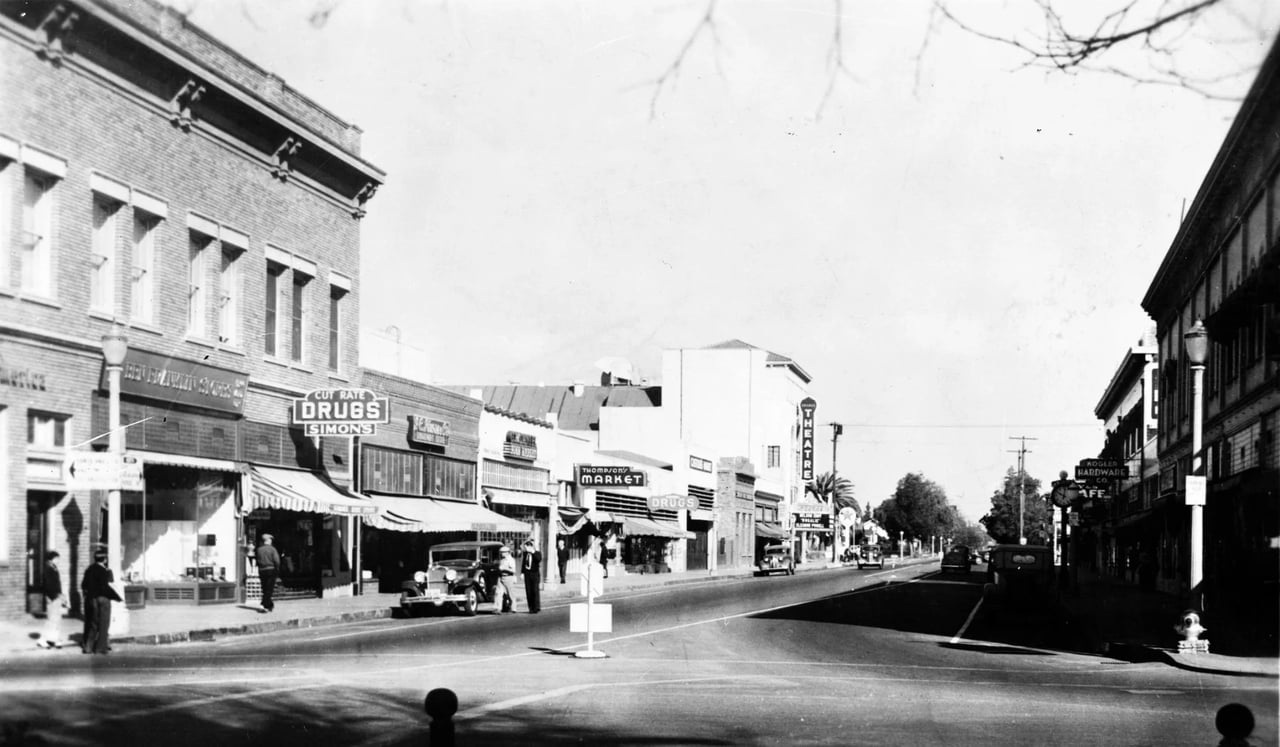
Then there's the art deco of the Campbell Block, the neoclassical Bank of Orange (now Wells Fargo), and the streamline moderne of Watson's Drug and Soda Fountain — each style a snapshot of the cultural moment that produced it, all within a short walk of each other. Ocarchitectureguide
The Details You'd Miss — Unless You Know
This is where it gets really interesting.
See that smooth stucco facade on some of the commercial buildings near the Plaza? In many cases, there's original brick masonry hiding underneath. During mid-century modernization, owners often "tidied up" their historic exteriors with false fronts. Today, restoring that original material isn't just an aesthetic choice — it can unlock significant historical value and real tax advantages through the Mills Act, a program many Old Towne properties qualify for.
The lot sizes and setbacks here are all over the place — and that's a feature, not a bug. Pre-zoning, homes were built based on land availability and need, not strict planning codes. The result? Deeper lots, alley access, and detached carriage houses — many of which can be preserved, rehabilitated, and today converted into ADUs or expanded living space. City of Orange
Even the windows tell a story worth knowing. Old-growth lumber used in historic windows is actually more stable, dense, and rot-resistant than any wood available today — meaning a properly maintained original window can outlast a modern replacement. City of Orange It's also why vinyl windows aren't just discouraged here — they're prohibited. Old Towne doesn't do shortcuts.
And here's a quiet detail worth appreciating: many of the older homes were oriented specifically to capture prevailing coastal breezes — passive cooling design that predates air conditioning by decades. That subtle intelligence still affects how comfortable these homes feel on a warm Southern California afternoon.
The Decline, the Revival, and What It Tells You About Value
No historic district story is complete without its near-miss.
In the 1960s and 1970s, Old Towne started to decline, with anchors like J.C. Penney and Buster Brown shoes closing or relocating to nearby malls. Preserveorangecounty It looked, for a moment, like the kind of story that ends with a parking structure and a strip mall.
Then the antique dealers arrived. A revitalization took hold in the 1980s, making Orange a destination for vintage in a county otherwise obsessed with newness. By 1995, Old Towne had more than 50 antique shops and 350 dealers. Preserveorangecounty The buildings that had been overlooked were suddenly the whole point.
That recovery wasn't just a cultural moment — it was a market signal. The things that made Old Towne "old" were exactly what gave it staying power.
Hollywood Noticed, Too
Here's a fun footnote to the authenticity argument: Old Towne has long been a favorite location for film and television productions. Tom Hanks used much of the town as early 1960s Pennsylvania for That Thing You Do. The Coen Brothers filmed The Man Who Wasn't There here. American Horror Story used it as an East Coast town for multiple seasons. Bridesmaids, Crimson Tide, Cannonball Run — the list goes on. Preserveorangecounty
As one film commissioner put it: "It has an All-American look. So it can play the Midwest. It can play the East Coast. It can also play period." Preserveorangecounty
When Hollywood needs a place that looks genuinely real, they come here. Buyers should take note.
Why This Matters When You're Buying or Selling
Old Towne Orange isn't just preserved — it's protected. As part of a nationally recognized historic district, architectural integrity isn't optional. Buyers here aren't just purchasing a home; they're becoming stewards of something irreplaceable. And as one longtime observer put it back in 1999: "What makes Old Towne work in Orange is that what was here 50, 60 years ago is still here. The buildings, the houses, the churches, the Elks. It's still pretty much the same feeling now as it was then." Preserveorangecounty
That consistency is exactly where the value lives.
These properties don't compete the way typical inventory does. They're evaluated on rarity, architectural purity, and historical context — not just square footage and updated kitchens. Understanding the architectural lineage means understanding the pricing — and understanding why that pricing holds when everything around it fluctuates.
What Real Expertise Looks Like Here
There's a meaningful difference between appreciating Old Towne Orange and truly knowing it.
Knowing it means recognizing original millwork versus reproduction. It means understanding when a renovation enhanced a home's value — and when it quietly erased what made the home worth having in the first place. It means being able to place a property within its architectural era and tell that story in a way that resonates with exactly the right buyer.
Because in a place like this, you're not just selling a house.
You're selling a piece of a story that started with a poker game in 1871 — and has been appreciating ever since.