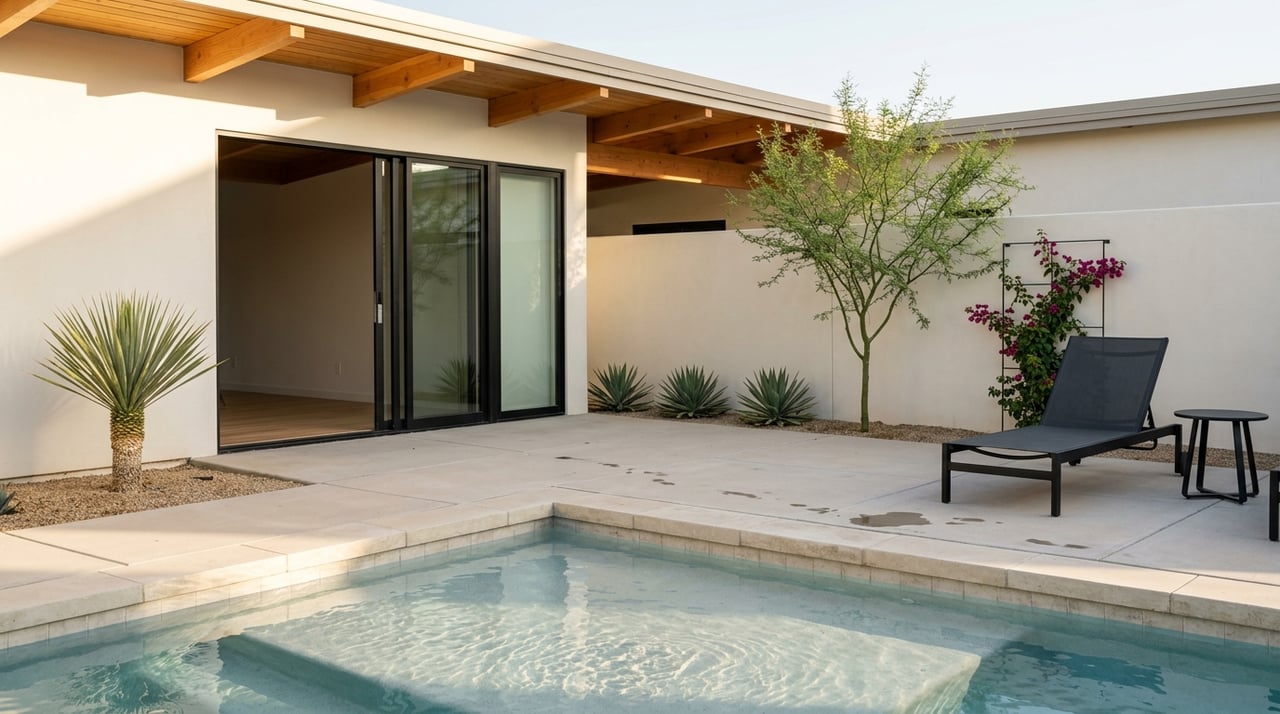
Dreaming about Palm Springs often starts with an image: clean rooflines, a pool catching the late light, and glass walls opening to the mountains. If you are drawn to that picture, College Park puts you close to the design legacy and desert rhythm that make the city feel so distinct. This guide will help you understand how living the midcentury lifestyle in College Park really works, from architecture and climate to everyday convenience and smart buyer research. Let’s dive in.
College Park in Palm Springs
College Park is the northern Palm Springs planning area, covering about 510 acres. According to the city, it is bounded by Highway 111, the Whitewater/Chino Creek flood-control levee, Indian Canyon Drive, and San Rafael Drive.
That location places you about one mile north of the Village commercial district and near the Palm Springs Aerial Tramway entry area. In practical terms, you are close to dining, events, and city amenities while still feeling connected to the open desert setting that defines Palm Springs.
One important detail is that College Park is not a single uniform enclave. The plan area includes established residential neighborhoods along with commercial and industrial parcels, so the character can shift from block to block.
Why Midcentury Living Fits Here
Palm Springs is widely known for Mid-Century Modern architecture, and the city’s Community Design Element reinforces that identity. Clean lines, flat and butterfly roofs, expansive glass, and a strong indoor-outdoor relationship are all part of the local design language.
In College Park, that style is more than a look. It shapes how you use your home day to day. Patios, pool decks, shaded overhangs, and outdoor rooms are not just attractive extras. They are central to desert living.
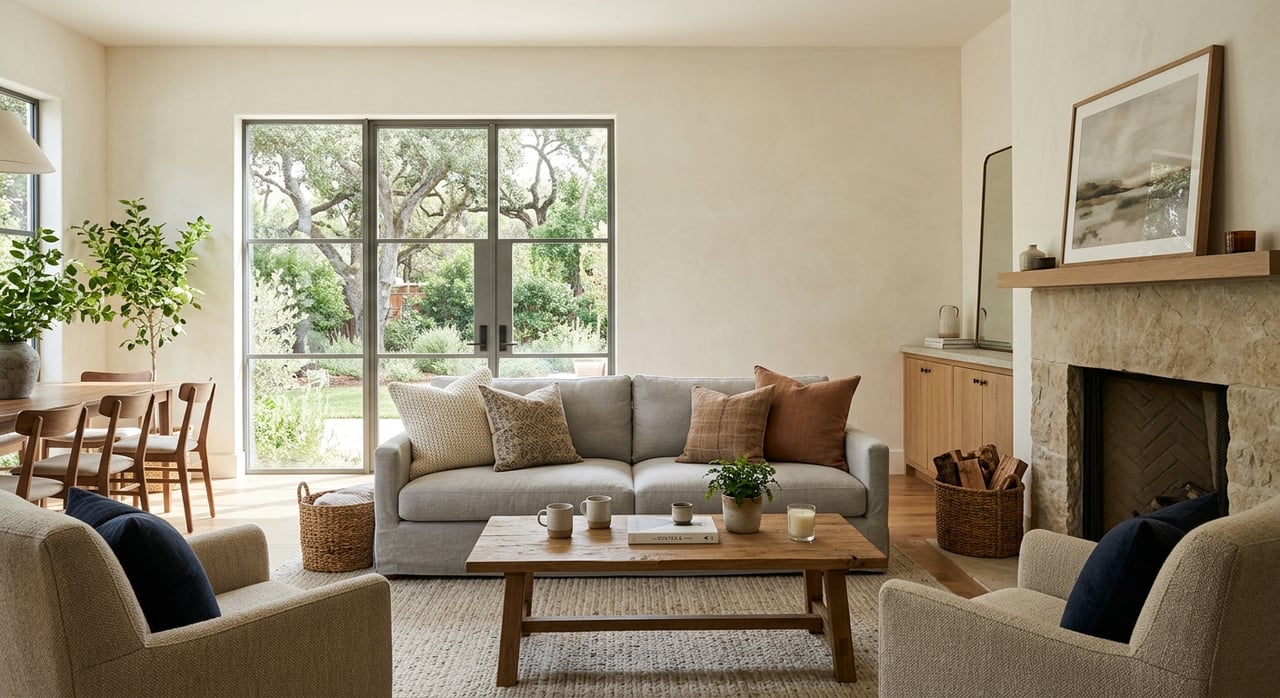
A well-designed midcentury home in Palm Springs tends to blur the boundary between inside and outside. You might move from the kitchen to the patio for coffee, spend the afternoon under a covered lounge area, and end the day with doors open to the evening air.
The Indoor-Outdoor Routine
The best midcentury homes here are designed to work with the climate, not against it. That often means open plans, strong sightlines, and outdoor areas that feel like extensions of the main living spaces.
When you are touring homes in College Park, look beyond style alone. Ask yourself whether the layout opens naturally to the yard, whether there is meaningful shade, and whether the main rooms capture views without feeling overly exposed to heat.
Those details shape daily comfort. In Palm Springs, a beautiful house is also a functional one, especially when outdoor living is part of the plan.
Climate Shapes the Lifestyle
Palm Springs has a very clear seasonal rhythm. NOAA climate normals for Palm Springs Regional Airport show average highs of 70.5°F in January, 103.6°F in June, 108.6°F in July, 108.1°F in August, and 69.2°F in December. Annual precipitation totals just 4.61 inches.
That weather pattern is a major reason the midcentury lifestyle feels so natural here. Winter brings warm, mild days. Spring is ideal for pool time and outdoor lounging. Summer often shifts activity to early mornings, shaded afternoons, and evenings after sunset.
If you love the idea of living with walls of glass and seamless patio access, the climate helps explain why that design became so iconic in Palm Springs. With more than 300 days of sunshine in the region, the home is meant to open outward.
What Daily Life Can Feel Like
In the cooler months, you may find yourself using the patio almost like an extra living room. Morning coffee outside, lunch near the pool, and dinner under a covered terrace can become part of the weekly routine.
During hotter months, the rhythm changes rather than disappears. Early walks, shaded pool time, and evening dining outdoors often make more sense than midday activity. For many buyers, that is part of the appeal rather than a compromise.
This is one reason a College Park home can work well as a primary residence, second home, or work-from-anywhere base. The architecture and climate create a lifestyle built around pace, light, and intentional use of space.
Access to Palm Springs Amenities
College Park benefits from being part of the broader Palm Springs fabric rather than feeling cut off from it. The city presents itself as a full-service community with police and fire departments, a library, parks, a dog park, hiking, shopping, moviegoing, and restaurants.
Palm Springs also offers a strong lineup of recreation and cultural attractions. The city highlights golf, tennis, a public Olympic-size pool, bicycle routes, a water park, museums, horseback riding, and the Palm Springs Aerial Tramway.
For many buyers, that means a College Park address can support a full lifestyle beyond the walls of the home. You are not only buying architecture. You are buying into a city with an active calendar and a wide range of things to do.
Dining, Events, and Nearby Energy
Downtown Palm Canyon Drive and Uptown are key anchors for shopping, galleries, restaurants, and nightlife. The city also spotlights VillageFest on Thursday nights, along with major recurring events like the Palm Springs International Film Festival and the Festival of Lights Parade.
If you picture a weekend that includes brunch, gallery browsing, and a relaxed evening out, the location supports that vision. College Park gives you access to that energy without putting you in the middle of the busiest commercial areas.
That balance is part of the neighborhood’s appeal. You can enjoy the broader Palm Springs scene while returning home to a setting defined by mountain views, open sky, and a more residential pace.
What to Look for in a College Park Home
If you are shopping for a midcentury or architecture-forward home here, it helps to focus on livability as much as design provenance. A smart home search should include both visual appeal and practical desert performance.
Here are a few features worth paying close attention to:
- Shade structures and overhangs that make outdoor areas usable
- Glass placement and orientation that bring in views while managing heat
- Pool and patio layout that supports real daily use
- HVAC condition and capacity for summer temperatures above 100°F
- Yard design that feels intentional and desert-appropriate
These details can make a big difference in how the home feels throughout the year.
Smart Buyer Questions to Ask
A design-forward home in Palm Springs deserves careful due diligence. College Park has specific planning and infrastructure context that buyers should understand before making assumptions.
Start with the parcel itself and the immediate surroundings. Since the area includes residential, commercial, industrial, and vacant or infill parcels, one street may feel very different from the next.
It is also wise to confirm any HOA rules, CC&Rs, exterior guidelines, or short-term rental restrictions that may affect how you use the property. The city maintains vacation-rental information resources, which makes this an important research step for buyers considering part-time use or investment potential.
Flood and drainage exposure should also be part of your review. The College Park specific plan notes that the area sits south of the Whitewater River flood plain and depends on levees and drainage facilities.
For older or architecturally notable homes, ask whether historic designation, eligibility, preservation guidelines, or Mills Act considerations apply. Palm Springs references the Mills Act as a preservation tool, so this can matter for certain properties.
Why Design-Minded Buyers Pay Attention
For buyers who care about architecture, College Park offers something bigger than a house alone. It offers proximity to the Palm Springs design story, where the landscape, climate, and built form all reinforce each other.
That matters if you are looking for a home with personality and a strong sense of place. Midcentury living here is not about staging a look. It is about finding a property that supports how you want to move through the day.
The right fit may be a pristine post-and-beam, a carefully updated desert retreat, or simply a home with the right bones and orientation. What matters most is whether the property delivers on the lifestyle that makes Palm Springs so enduring.
If you are exploring College Park Palm Springs and want a design-aware perspective on architecture, neighborhood feel, and what to look for block by block, Kelly Laule can help you navigate the search with a thoughtful, tailored approach.
FAQs
What is College Park in Palm Springs known for?
- College Park is the northern Palm Springs planning area, known for its location near downtown Palm Springs, its mix of residential and other land uses, and its connection to the city’s broader desert and midcentury lifestyle.
What defines the midcentury lifestyle in College Park Palm Springs?
- The lifestyle is shaped by Mid-Century Modern design features like clean lines, large glass areas, and strong indoor-outdoor flow, along with a climate that encourages patios, pool areas, and shaded outdoor living.
What is the weather like in College Park Palm Springs?
- Palm Springs has warm winters, very hot summers, and low annual rainfall. NOAA normals show average highs around 70.5°F in January and above 103°F from June through August.
What amenities are near College Park in Palm Springs?
- College Park is close to downtown Palm Springs, Uptown, restaurants, shopping, events, parks, hiking, museums, bicycle routes, and the Palm Springs Aerial Tramway area.
What should buyers research before buying in College Park Palm Springs?
- Buyers should review HOA or CC&R rules, short-term rental restrictions, nearby land uses, flood and drainage context, HVAC and utility considerations, and any preservation or Mills Act issues tied to the property.
Is College Park Palm Springs a uniform neighborhood?
- No. The city’s planning documents note that the area includes residential, commercial, industrial, and infill parcels, so the feel can vary depending on the block and nearby uses.